
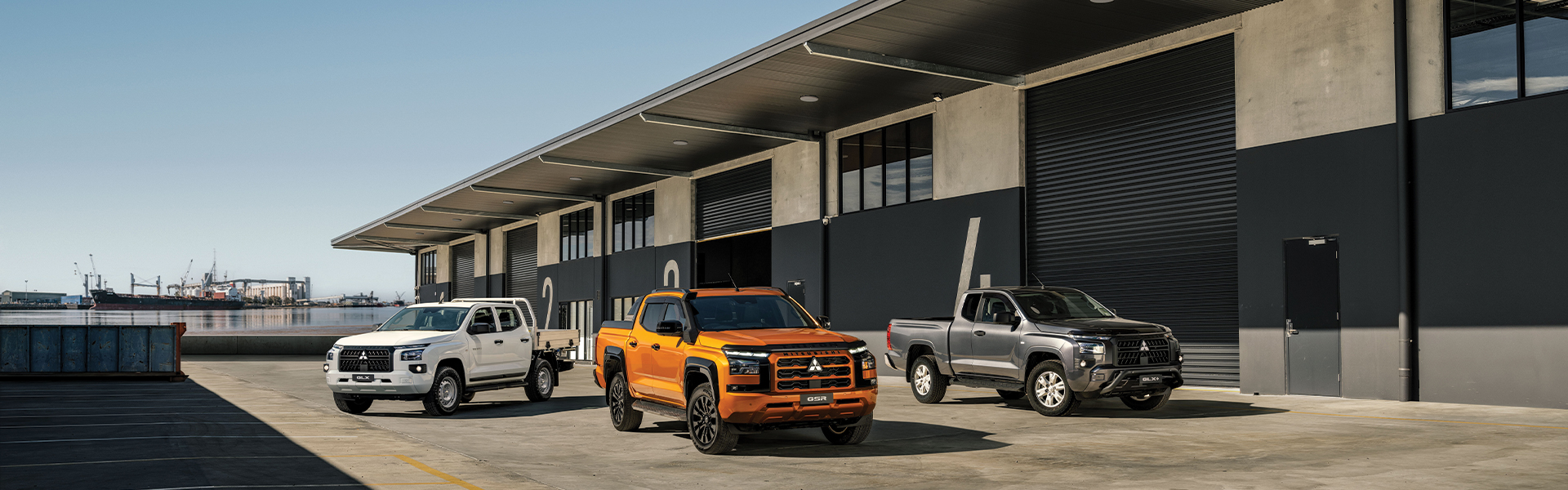
Unbraked vs Braked Towing Capacity: What's the Difference and Which Do You Need?
Understanding towing capacity could be the difference between a safe family adventure and a dangerous situation on Australian roads.
In Australia, trailers over 750kg must have brakes by law, yet many drivers remain unaware of the critical differences between unbraked and braked towing capacity. This misunderstanding can lead to serious safety risks, legal penalties, and expensive vehicle damage.
The reality is that "towing capacity" isn't just one simple number. Your vehicle has two distinct limits: what it can safely tow without trailer brakes (unbraked capacity) and what it can handle when the trailer has its own braking system (braked capacity). Modern vehicles like the Mitsubishi Triton offer up to 3,500kg braked towing capacity, but only 750kg unbraked - a massive difference that every driver needs to understand.
Getting this right means the difference between enjoying worry-free family holidays with your caravan and facing roadside emergencies, insurance complications, or worse. Let's explore exactly what these terms mean and how to choose the right setup for your needs.
Unbraked Towing Capacity Explained
Unbraked towing capacity refers to the maximum weight your vehicle can safely tow when the trailer has no braking system of its own. Across all Australian states and territories, this limit is capped at 750kg - a figure that's not arbitrary but based on crucial safety considerations.
When towing without trailer brakes, your vehicle's braking system must handle stopping both the car and the trailer. This significantly increases braking distances and puts extra strain on your brake pads, discs, and overall stopping ability. The 750kg limit exists because beyond this weight, the physics of stopping safely become increasingly dangerous, particularly in emergency situations.
Typical applications for unbraked towing include:
Small box trailers for weekend hardware store runs, jet ski trailers for beach adventures, utility trailers for camping gear, and lightweight camping trailers. These loads are perfect for vehicles like the Mitsubishi Outlander, which offers 1,600kg braked capacity but remains limited to 750kg when towing unbraked trailers.
The risks of exceeding unbraked limits are serious. Extended braking distances can catch drivers off guard, particularly when descending hills or in stop-start traffic. Your vehicle's brakes will experience accelerated wear, potentially leading to brake fade or failure. In emergency braking situations, the trailer's momentum can push your vehicle forward, reducing steering control and increasing the risk of jack-knifing.
From a legal perspective, exceeding the 750kg unbraked limit isn't just unsafe - it's illegal. Penalties can include fines, demerit points, and in serious cases, having your licence suspended. Insurance companies may also refuse claims if you're found to be operating outside legal towing limits.
The key takeaway? If you're regularly towing loads approaching 750kg, or planning to tow anything heavier, trailer brakes aren't optional - they're necessary for safety and legal compliance.
Braked Towing Capacity Explained
Braked towing capacity represents your vehicle's maximum towing capability when the trailer is equipped with its own braking system. This figure is significantly higher than unbraked capacity because the trailer contributes to its own stopping power, dramatically improving overall safety and control.
Australian regulations require specific brake configurations based on trailer weight: trailers between 751-2000kg need brakes on at least one axle, while trailers over 2000kg require brakes on all wheels. Trailers exceeding 2,000kg must also be equipped with automatic breakaway systems that activate if the trailer becomes detached from the towing vehicle.
Understanding trailer brake types helps you choose the right system:
Override or surge brakes use mechanical activation through the trailer coupling. When you brake, the trailer pushes against the coupling, activating its brakes automatically. These systems work well for trailers up to 2,000kg and require no additional vehicle modifications.
Electric brakes offer superior control and are operated directly from the driver's position via a brake controller installed in your vehicle. This system allows you to adjust braking force and apply trailer brakes independently if needed. Electric brakes are preferred for heavier trailers and provide more precise control.
Electric over hydraulic systems combine electric control with hydraulic brake activation, typically used for the heaviest trailer applications where maximum stopping power is required.
The benefits of trailer brakes extend far beyond legal compliance. Stopping distances increase dramatically, often reducing by 30-40% compared to unbraked towing. Vehicle control remains stable during emergency braking, and your vehicle's brake system experiences significantly less wear.
Modern vehicles integrate trailer braking seamlessly with their electronic systems. Advanced models include trailer sway control and stability management that can apply individual brakes to correct trailer movement before it becomes dangerous.
Australian Legal Requirements and State Variations
While the 750kg threshold for trailer brakes remains consistent across all Australian states and territories, other towing regulations can vary, making it important to understand the specific rules for your location and travel destinations.
National standards that apply everywhere include:
Trailers must be fitted with brakes if the Gross Trailer Mass exceeds 750kg. All brake systems must comply with Australian Design Rules (ADR), and trailers under 2,500kg when loaded require at least one safety chain, while those over 2,500kg need two safety chains.
State-specific variations affect your towing experience:
Speed limits when towing vary between states. New South Wales allows towing at posted speed limits provided the combined vehicle and trailer weight doesn't exceed 4,500kg, while Western Australia caps towing speeds at 100km/h regardless of posted limits.
P-plate restrictions differ significantly. In the ACT, provisional licence holders cannot tow trailers exceeding 750kg within their first 12 months, while other states have varying restrictions or no limitations at all.
The importance of compliance cannot be overstated. Driving with illegal towing setups can result in fines and demerit points, but the consequences extend beyond immediate penalties. Insurance companies routinely investigate towing compliance following accidents, and non-compliance can void your coverage entirely. In serious accidents, legal liability can extend to criminal charges if negligence is proven.
Choosing the Right Vehicle and Trailer Combination
Successful towing starts with understanding your vehicle's true capabilities and matching them appropriately to your trailer and load requirements. The key is recognising that advertised towing capacity represents maximum capability under ideal conditions - real-world towing often requires more conservative approaches.
Vehicle considerations go beyond simple towing capacity figures. The Gross Combined Mass (GCM) determines the actual legal weight maximum of your vehicle and trailer together, which can be lower than the advertised towing capacity when your vehicle is loaded with passengers and cargo.
For serious towing applications, vehicles like the Mitsubishi Triton with its 3,500kg braked towing capacity provide the muscle needed for large caravans, boat trailers, or work applications. The Triton's robust chassis and advanced 4WD systems make it ideal for challenging terrain and heavy loads.
For recreational family towing, the Mitsubishi Outlander's 1,600kg braked capacity handles most camping trailers, boat trailers, and recreational equipment while maintaining excellent fuel economy and urban drivability.
Calculation methods ensure safe operation:
Gross Trailer Mass (GTM) includes the trailer plus everything loaded on it, while Aggregate Trailer Mass (ATM) represents the maximum the trailer can legally carry. Ball weight - typically 10% of trailer weight - affects your vehicle's rear axle loading and must not exceed towbar ratings.
Other critical factors influence your setup:
Terrain plays a huge role in towing safety. Mountain roads, beach sand, and steep boat ramps all demand different approaches and potentially reduced load limits. Weather conditions, particularly crosswinds and wet roads, can dramatically affect trailer stability.
Driver experience matters significantly. New towers should start with lighter loads and gradually build confidence and skills before attempting maximum-weight towing.
Vehicle modifications might be necessary for optimal towing. Weight distribution hitches, transmission coolers, and upgraded suspension can all improve towing capability and safety.
Safety Best Practices
Safe towing requires systematic preparation and ongoing vigilance. Pre-journey safety checks should verify that all trailer lights work correctly, the trailer is securely coupled, and the load is properly distributed and secured.
Brake system verification is critical - test both vehicle and trailer brakes independently before departing. Check coupling and safety chain connections, ensuring chains are crossed under the drawbar to catch it if coupling fails.
Driving techniques change significantly when towing. Allow longer distances for braking, overtaking, and joining traffic streams. Use lower gears when travelling downhill to increase vehicle control and reduce brake strain.
If trailer sway develops, avoid applying vehicle brakes except as a last resort. Instead, maintain steady speed or accelerate gently while the sway settles.
Conclusion
Understanding the difference between unbraked and braked towing capacity is fundamental to safe, legal towing in Australia. The 750kg unbraked limit applies universally, while braked capacity varies by vehicle - from the Outlander's 1,600kg suitable for recreational towing to the Triton's impressive 3,500kg capacity for serious hauling.
Getting your towing setup right protects your family, other road users, and your investment in both vehicle and trailer. The combination of proper equipment, legal compliance, and safe driving practices ensures your adventures remain memorable for all the right reasons.
Ready to explore your towing options? Visit your local Mitsubishi dealer for expert advice on matching the right vehicle to your towing needs, and ensure professional installation of any towing equipment for maximum safety and performance.